
Impact of Global Maritime Trends on UK CoC Careers
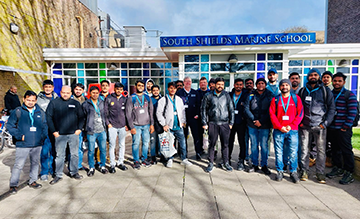
The maritime industry is revolutionizing because of the world's sustainability, technological changes, and emerging international trade. Experts in the industry are forced to change to remain competitive. The School of Marine Education (SME), based in South Shields Marine School (SSMS), UK, also has courses in the UK CoC in India, offering training of the highest quality in India and providing students with the skills and knowledge to be employed in the maritime sector in the future. This is one of the opportunities that allows mariners to develop strong, relevant, and future-ready careers.
Why the UK CoC Remains a Gold Standard
It is greatly prized within world shipping for its conformity with international merchant shipping standards.
Mariners who possess it are often favored since they are considered capable of coping with both conventional and contemporary requirements of ship operations.
For Indian applicants, availing this certification in India minimizes the hurdle of traveling or moving overseas for training altogether.
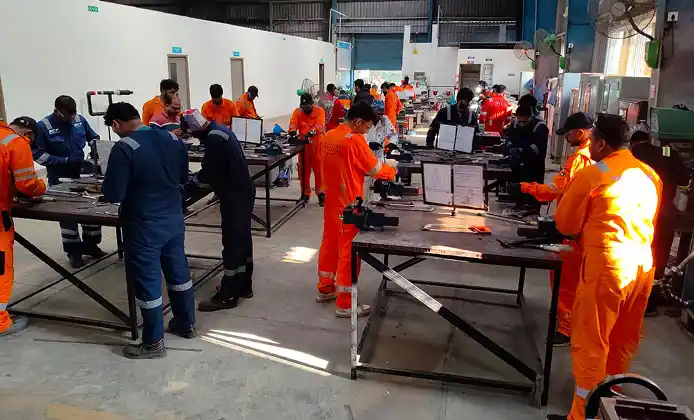
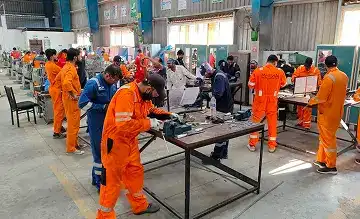
Organizations such as the School of Marine Education (SME) in India are instrumental in providing maritime training within the country. SME, in association with SSMS, UK, makes available intensive training material and course formats to enable candidates to handle the challenges of protecting global shipping activities.
Key Maritime Trends and Their Effect on Careers
1. Environmental Sustainability and Green Shipping
The environmental regulations have become mandatory, and the companies are required to minimize pollution and emissions. The shipping sector is a greener industry with IMO 2020 sulfur regulations and fresh greenhouse gas regulations.
To those who have (or want to have) the certification, this involves:
Knowledge of low-emission technology, fuel alternatives, and energy-saving systems on the vessel.
Mobilization Competitive advantage to officers who are trained on courses in India, which are located in courses on sustainability, environmental laws, and green maritime operations.
Better employability because shipping companies are demanding officers capable of making them comply with environmental norms.
2. Digitalization, Smart Ships & Autonomous Systems
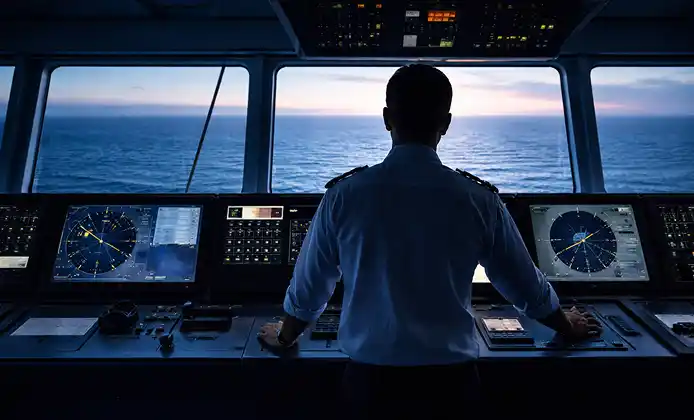
Digital transformation is transforming the manner in which ships are handled, monitored, and maintained. The emergence of intelligent ships and sensors, automation, remote monitoring, and data analysis introduces new expectations on the side of the officers.
Besides navigation and ship handling, officers must be familiar with the systems of the software, data-driven decision-making, and digital fault-finding.
The applicants appreciate the programs that incorporate training in digital systems, maritime informatics, and cybersecurity, which is now the cornerstone of modern ship operation.
Seamanship and digital skills are the way forward, and so the demand for officers is to enable the operations undertaken by them to be both efficient and devoid of errors.
3. Global Mobility & Career Opportunities
Companies worldwide are looking for officers skilled in both sustainability and digital systems. This certification continues to act as a passport to such opportunities.
For Indian mariners:
Indian training offers global shipping lines and career opportunities in various geographies.
It is widely accepted internationally and, thus, has an easy time entering different shipping markets.
The trend where increased attention is paid to green shipping and automation means that employers favor self-motivating students, something that is demonstrated by the application of advanced studies that are aligned with the latest trends.
How SME & SSMS Collaboration Enhances Training
SME offers accessibility to training locally, and its partnership with SSMS, UK, makes the course content consistent with international standards.
The partnership includes the modules on green shipping, digitalization, and compliance.
Applicants can acquire an international knowledge level in India and be confident that they can work on an international level.
Challenges & Strategies for Aspirants
Select schools that offer strong modules in sustainability, digitalization, and modern ship systems (e.g., SME).
Choose future-oriented courses such as green shipping and smart vessel operations.
Focus on solid theoretical knowledge and fieldwork rather than depending solely on simulations.
Learn from teachers with academic and professional maritime expertise.
Conclusion
Careers are being transformed by global maritime trends such as sustainability and digitalization. The UK CoC continues to be a well-respected qualification worldwide. With access to courses in India under the SME–SSMS collaboration, candidates can prepare for a profession that is truly future-ready.